
Modernizing Your Accounting Firm’s Website: 5 Features to Build Trust and Clients
When someone searches for an accountant, they’re not only comparing prices, they’re comparing confidence.
Your website is often the first “meeting” a potential client has with your firm. If it feels outdated, unclear, or hard to use, people quietly click back to Google. But when it looks professional and makes the next step obvious, you immediately feel more trustworthy than the firm down the street.
This guide covers five practical website features that help an accounting firm website build trust and generate more qualified inquiries, without needing a massive redesign or a custom build.
1) Team credentials that feel real (not like a stock brochure)
In finance, trust is everything. Visitors want to know:
Who will handle their business or personal finances?
What experience do you have?
Are you qualified for their specific situation?
What to include
Team page with professional headshots (real photos, consistent lighting)
Each key person’s role + credentials (CPA/ACCA, years of experience, specialties)
Industries served (construction, ecommerce, freelancers, SMEs, medical, etc.)
A short “what it’s like working with us” paragraph (tone matters)
Quick win
Add a small “trust strip” under your hero section:
Years in business
Clients served
Certifications
Average response time
This is simple but it instantly reduces uncertainty.
2) Service pages that answer “Is this for me?”
Most accounting websites list services like a menu. That’s a missed opportunity.
A strong service page does three things:
Confirms you solve a problem
Shows what the process looks like
Makes the next step easy
What high-performing service pages include
A clear one-sentence description (no jargon)
Who it’s for: “Best for…”
What clients get (deliverables)
What you need from them (inputs)
Timeline / monthly cadence
FAQs (common objections)
Don’t forget VAT services (high-intent)
If you serve businesses in the EU or any VAT-regulated market, dedicate a service page to VAT work. People search for specifics like:
VAT registration support
VAT reporting
VAT book / VAT books
compliance and documentation help
Even if your workflow is digital, these keywords still match what business owners type into Google.
3) Secure, professional contact and onboarding forms
If your contact form looks generic, is missing privacy reassurance, or asks too much too soon, clients hesitate.
A modern accounting firm website should feel safe and confidential — without being complicated.
What to do
Use a short contact form for first contact:
Name
Email
Company (optional)
What they need help with (dropdown)
Short message
Add a line of reassurance:
“We reply within 1 business day.”
“Your information is treated confidentially.”
Go one step further
Offer two paths:
Request a callback
Book a consultation
Even if you don’t use a booking system, you can simulate it with a “preferred time” field.
4) Helpful content that proves expertise (without feeling salesy)
A blog isn’t about “posting news.” It’s a trust engine.
When a potential client sees you answering real questions, you stop being a random website and start being the obvious expert.
Blog topics that work for accountants
“Bookkeeping checklist for small businesses”
“How to prepare for year-end accounts”
“Payroll mistakes that cause penalties”
“VAT reporting basics: what businesses should track”
“What to bring to your first meeting with an accountant”
Make it digestible
Use headings, bullets, and short sections
Add one graphic or checklist per post
End with a simple CTA
This supports SEO: informative posts attract long-tail searches and backlinks over time.
5) Speed, mobile layout, and “calm” design
Most clients browse on mobile first — and they decide fast.
Modern finance web design should feel:
clean
stable
organized
easy to scan
Key upgrades
Mobile-friendly typography (no tiny text)
Clear spacing and consistent headings
Fast-loading images
Avoid heavy sliders everywhere
Use 1–2 accent colors, not five
Simple homepage structure that converts
Clear headline + positioning
Services overview
Trust indicators (credentials, stats, badges)
Industries served
Testimonials
CTA + contact options
Why an industry-focused theme beats a generic template
A generic template forces you to “bend” the design into a finance layout. An industry-focused consulting WordPress theme already includes the patterns your visitors expect.
That means:
faster setup
less redesign work
a more trustworthy first impression
Recommended option: Accounting theme
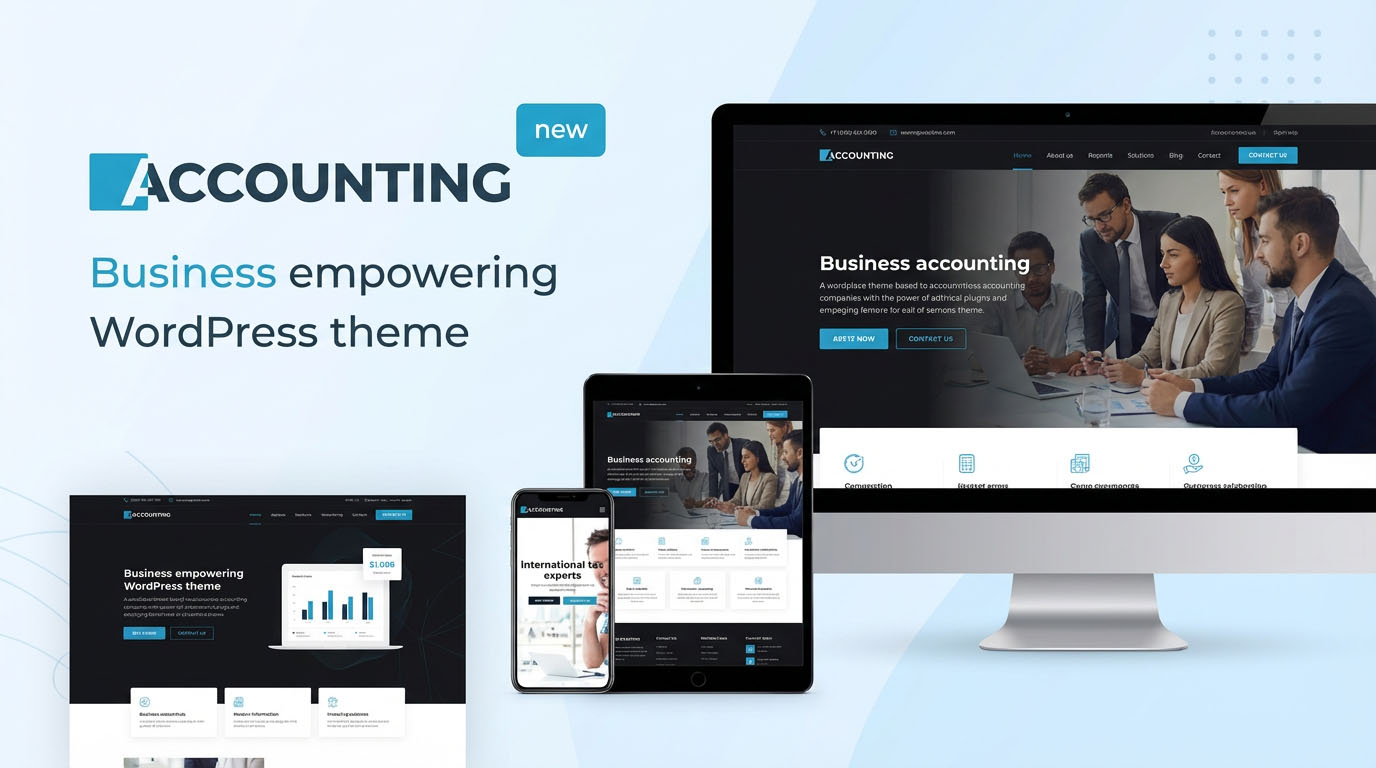
If you’re building on WordPress, the Accounting theme is designed specifically for accounting and finance businesses — with a professional structure that helps you present services, credentials, and contact flows clearly.
Quick checklist: modern accounting firm website essentials
✅ Team credentials and real photos
✅ Dedicated service pages with clear “who it’s for”
✅ Secure, confidence-boosting contact forms
✅ Helpful blog content that shows expertise
✅ Fast, mobile-first, calm professional design
✅ Clear VAT services (including VAT books keywords)